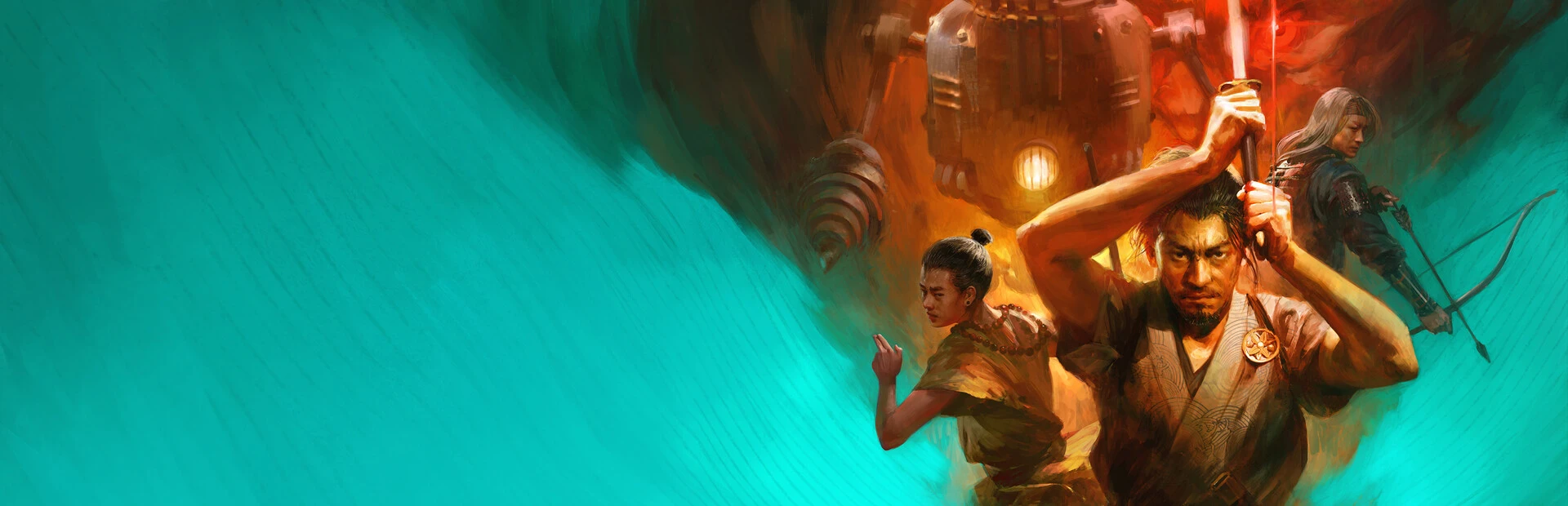
- The Shadow of the Road story trailer reveals the setting: Japan in 1868, on the brink of a new era.
- Three forces clash: the Shogunate, the Emperor's East Nippon Company, and the awakened Yokai.
- You follow two ronin who accept a contract that is more than it appears.
- Player choices shape relationships and unlock branching story paths.
- The narrative avoids heroes and villains, framing every faction as morally gray.
Shadow of the Road Story Trailer: Setting the Stage
The Shadow of the Road story trailer opens with a single striking image: 1868 Japan, an old world burning at the edge of an era. Shadow of the Road is a story-driven, turn-based RPG set during the fall of Japan's feudal period, but the trailer makes clear this is an alternative vision of history, one where the conflict extends far beyond politics.
Before diving into the trailer's imagery, watch the official story overview to see the setting, tone, and factions in motion.
Video Highlights:
- The year 1868 establishes the historical turning point of the narrative.
- The trailer frames the war as a three-way conflict, not a simple two-sided civil war.
- Two masterless ronin serve as the player's entry point into the story.
- The closing question — "Tradition or progress? Honor or survival?" — signals the game's core thematic tension.
The trailer's narration deliberately avoids framing either major faction as righteous. Instead, it asks the player directly: which side offers salvation? That question is the emotional engine of the entire narrative.
Pay close attention to the trailer's final lines. The questions "Tradition or progress? Honor or survival?" map directly onto the choice system that drives the game's branching paths — they are not just flavor text.
The Three Factions of the Conflict
The trailer establishes three distinct forces competing for Japan's future. Understanding each one is essential before your first playthrough.
The Shogunate
- Represents tradition, order, and the samurai code
- Defends the old feudal structure
- Motivated by honor and continuity, not conquest
The Emperor & East Nippon Company
- Brings advanced technology and industrialization
- Promises a new era of progress
- Backed by a powerful company with its own agenda
- Morally gray: progress may come at a heavy human cost
The Yokai
- Ancient spirits and primal chaos
- Awaken only when balance is broken
- A third force outside human politics
- Threaten both sides equally as the war destabilizes Japan
| Faction | Core Value | Strengths | Narrative Role |
|---|---|---|---|
| Shogunate | Tradition, order | Samurai discipline, loyal warriors | Defender of the old world |
| Emperor / East Nippon Company | Progress | Advanced technology, industry | Engine of the new era |
| Yokai | Primal chaos | Supernatural power, ancient spirits | Consequence of broken balance |
The trailer explicitly states the conflict has no heroes or villains. Approach faction choices with this in mind — siding with "progress" or "tradition" carries trade-offs, and neither path is framed as the correct one.
The Two Ronin: Your Protagonists
Into this fractured land step two ronin — warriors who lost their lord in the war. Masterless and adrift, they accept a contract that is not what it seems, which launches the central journey of the game.
The trailer highlights several key beats about these protagonists:
- Their lordless status places them outside both factions' hierarchies, giving the player genuine freedom of allegiance.
- The contract they accept functions as the story's inciting incident, with hidden layers that unfold across the campaign.
- As the journey progresses, the party grows with new allies, each carrying their own loyalties and secrets.
- Player choices shape relationships between party members, leading to deepened trust or unforeseen consequences.
| Story Element | Trailer Detail | Gameplay Implication |
|---|---|---|
| Protagonists | Two ronin, lord lost in war | Dual-lead narrative perspective |
| Inciting incident | A contract "not what it seems" | Mystery-driven main questline |
| Party growth | New allies join the journey | Recruit-driven roster building |
| Relationships | Choices shape bonds | Branching dialogue and affinity |
| Consequences | Trust or unforeseen outcomes | Multiple endings likely |
A ronin is a samurai without a master — historically a figure of shame and wandering. The game uses this status thematically: characters with nothing left to lose are the ones free to choose Japan's future.
How the Choice System Shapes the Story
The trailer's strongest mechanical promise is its branching narrative. "Your choices will shape their relationships and open branching paths leading to deepened trust or to unforeseen consequences." Here is how to interpret that as a player preparing for the game.
Establish Early Alliances
Early contract decisions set the tone for which faction's storyline your ronin gravitate toward — tradition or progress.
Build Party Trust
Dialogue and mission choices deepen bonds with allies. High trust appears to unlock stronger relationship arcs and story content.
Navigate Branching Paths
Branching paths diverge based on accumulated choices, sending the party down meaningfully different routes through the war.
Face Consequences
Poor or reckless choices trigger "unforeseen consequences" — the trailer implies these can permanently alter relationships and outcomes.
| Choice Category | Potential Upside | Potential Risk |
|---|---|---|
| Faction allegiance | Unique allies, tech or samurai tactics | Locked out of opposing storylines |
| Party dialogue | Deepened trust, stronger bonds | Strained or broken relationships |
| Contract decisions | Hidden truths revealed early | Unforeseen consequences later |
| Moral dilemmas | Thematic resolution, character growth | Party conflict, branching consequences |
Because the narrative branches, avoid reloading saves to "fix" every choice on a first run. Let consequences play out — the story is designed around living with your decisions, not optimizing them away.
Themes and Tone: What the Trailer Tells Us
The story trailer communicates tone as much as plot. Three thematic pillars stand out.
Tradition vs. Progress
- The Shogunate's samurai code vs. the Company's machines
- Neither framed as right or wrong
- Player choices weigh both futures
Honor vs. Survival
- Ronin must choose principle or pragmatism
- Losing their lord already tested their code
- Central to character arcs
Balance and the Yokai
- Spirits awaken when balance breaks
- Human war has supernatural costs
- Chaos as consequence, not random evil
| Theme | Trailer Evidence | Emotional Function |
|---|---|---|
| Tradition vs. progress | "Tradition or progress?" closing line | Forces player self-reflection |
| Honor vs. survival | "Honor or survival?" closing line | Drives protagonist dilemmas |
| Moral ambiguity | "Without heroes nor villains" | Prevents simple faction worship |
| Supernatural stakes | Yokai awakening imagery | Raises tension beyond politics |
By refusing a clear villain, the trailer positions Shadow of the Road as a mature, choice-driven narrative RPG rather than a simple historical war story — a strong hook for fans of titles like Pentiment or Expeditions: Rome.
Pre-Release Checklist for Story-Focused Players
Before you start your journey through 1868 Japan, use this checklist to prepare for a story-first playthrough.
Story Playthrough Preparation:
- Watch the official story overview trailer in full
- Review all three factions and their motivations
- Decide your ronin's stance: tradition or progress
- Plan to commit to choices without save-scumming
- Track party relationships as allies join the journey
Q: What does the Shadow of the Road story trailer reveal about the setting?
The trailer is set in 1868 Japan, at the fall of the feudal era. It presents an alternative version of history where the political conflict between the Shogunate and the Emperor's East Nippon Company is compounded by a supernatural third force — the Yokai — awakening as balance breaks.
Q: Who are the main characters in Shadow of the Road?
The story follows two ronin — warriors who lost their lord in the war. They accept a contract that is not what it seems, and the party grows with new allies as the journey unfolds. Player choices shape relationships and open branching paths.
Q: Is there a villain in Shadow of the Road?
No. The trailer explicitly states the conflict has no heroes or villains. Both the Shogunate (tradition, order, the samurai code) and the Emperor's East Nippon Company (advanced technology, promises of a new era) are framed as morally gray, while the Yokai represent primal chaos rather than evil.
Q: How do choices affect the story in Shadow of the Road?
Choices shape relationships between party members and open branching narrative paths, leading to either deepened trust or unforeseen consequences. The trailer's closing questions — tradition or progress, honor or survival — hint at the core dilemmas players will face.